Fifty million songs
MySpace was among the walking dead when it lost fifty million songs. It wasn’t in a fire or a lawsuit, but in a mundane server migration in 2019. 2019, you ask? Yes, MySpace was still operational in 2019, and, you will be excited to hear, it still is today! Well, at least a little bit. Anyway, MySpace lost all songs that were uploaded before 2016, and they could not be retrieved again.
Vine went differently. It shut down, but there was an archive that persisted for years. A reprieve, you may think, but then in 2019, that went down too. What is it with 2019 that had those companies deleting historical user content? If you still had videos of yourself on Vine, now they are certainly gone.
With every new service, I keep assuming that they will be holding on to that material. But history seems to indicate that even Facebook and Instagram and TikTok will eventually lose your data in a migration crash. A surprisingly hopeful vision.
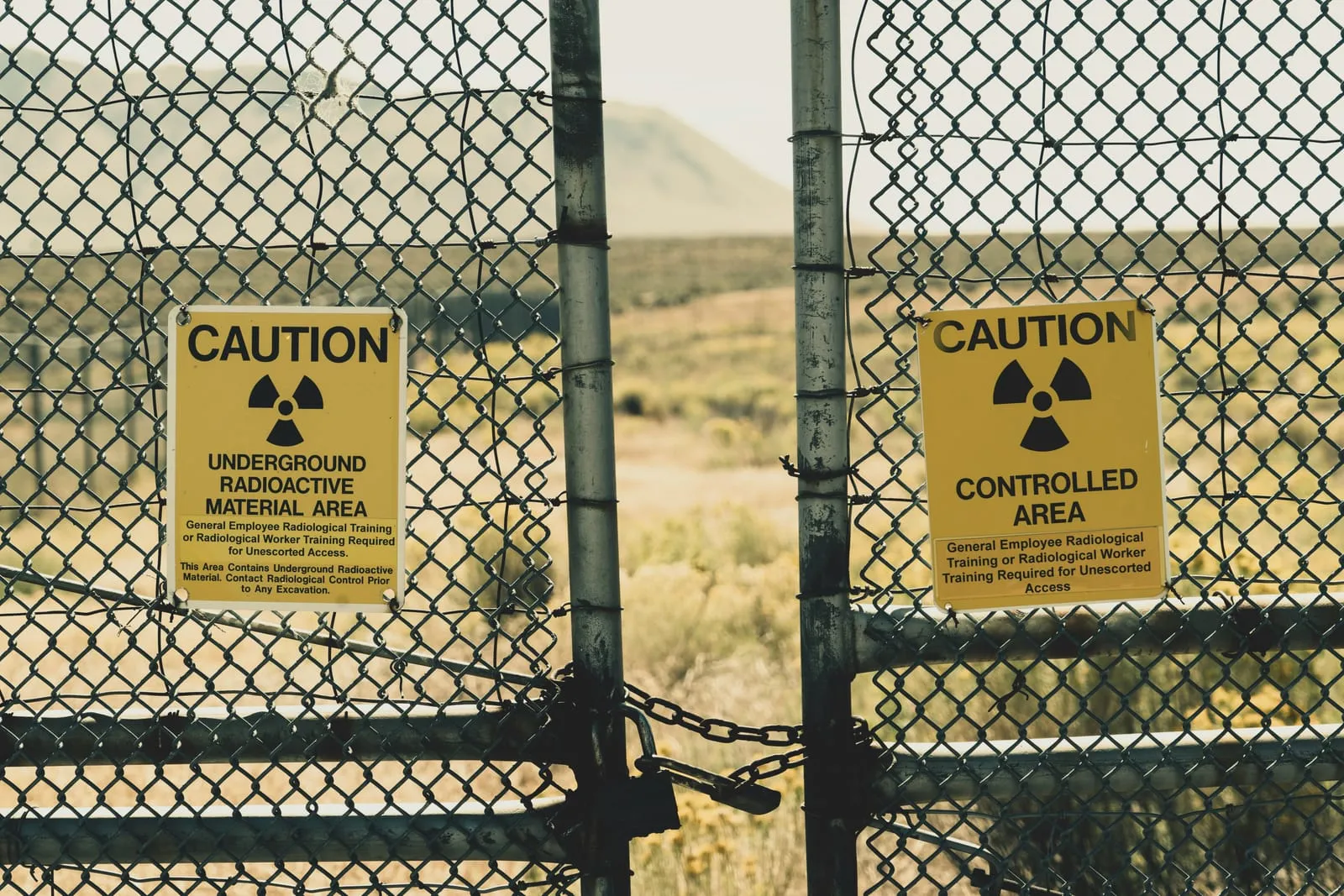
In the 1980s, nuclear waste was starting to become a real problem. A group of physicists, semioticians, sociologists, and psychologists in Nevada put their heads together, trying to create a message for the future. Ten thousand years in the future.
Ten thousand years back, people were just entering the Neolithic, that is, the New Stone Age. They were only just starting to transition from a hunter-gatherer lifestyle to a settled lifestyle, beginning to domesticate animals and experiment with farming.
Apparently this civilisation cannot hold on to even a decade of amateur music (forever lost for future historians), but the same civilisation also has semioticians trying to create a sign large and robust enough to stay legible in ten millennia. That’s five Jesuses from now, if you will.
You can argue that much of the MySpace music will still be available somewhere. And the rest will be insignificant amateur music. In fact, I myself had music uploaded there, in the aughts, when MySpace was still the hot shit. I have long lost the computer I recorded that music on. I would not have trusted MySpace to be a reliable steward of that music, and I should not have. But today, twenty years later, I would have been very happy to find my music again.
The nuclear waste messengers, by the way, proposed all the common sense and obvious and boring things. Extreme redundancy, pictograms, images, written text, many languages, markers, relay systems, maps, you name it.
There were also a couple of crazy, but much more fun suggestions.
Genetically modified plants or animals (a “ray cat”) that would start changing phenotype once exposed to sufficient amounts of radiation, as a warning sign. Artificial objects floating in the sky, indicating the location (this reminds me a lot of the Broken Earth trilogy by N. K. Jemisin). Enormous, artificially hostile landscapes: stone spikes protruding from the earth, black paint that would heat up in the sun, anything that would make any visitor want to leave as soon as possible.
My personal favorite, though, is Sebeok’s “Atomic Priesthood.” This would be an artificially created religious institution, full of sacraments and rites and beliefs, tasked with preserving the holy knowledge about the demons buried deep in the earth. Inspired by the amazing Catholic Church that has done so well preserving the word of Christ over two thousand years.
You can make up your own mind on what to think of those approaches. In the meantime, I have started practicing my own personal faith, preserving my own data in a monthly ritual of data backup and annual year-end celebration revisiting all my testimony generated so far.
-Dan